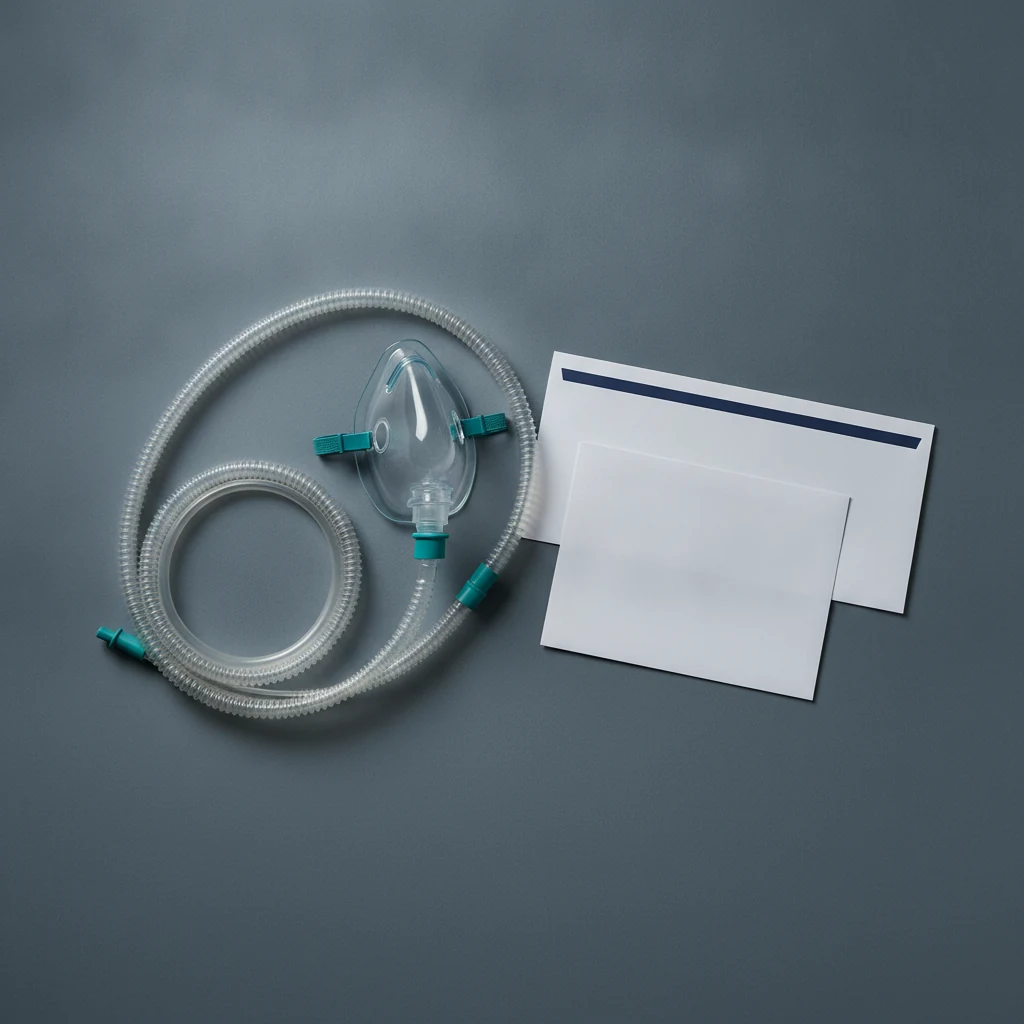
Anesthesia almost never shows up in the price your surgeon quotes you. It arrives on its own, from a provider you likely never met until the morning of your operation, and it is calculated in a way nothing else in your surgery is: by the minute. For an insured patient having a covered, in-network operation, the anesthesia line can still run from a few hundred dollars to well over a thousand out of pocket, depending on how much of your deductible is left. For a cash-pay cosmetic patient, it usually isn't a surprise bill at all — it's already baked into the quote, which is exactly why you should read that quote closely. Those are two different stories, and most cost articles tell neither.
Why anesthesia is priced unlike anything else in your surgery
Your surgeon's fee is a flat number tied to the procedure. Anesthesia isn't. It runs on a units formula the American Society of Anesthesiologists standardized decades ago, and every payer — Medicare, your commercial insurer, a cash-pay surgery center — uses the same skeleton:
(Base units + Time units + Modifying units) × a conversion factor = the anesthesia charge.
- Base units come from the ASA Relative Value Guide and are fixed to the specific anesthesia code (CPT 00100–01999) for your operation. They reflect the complexity and risk of keeping you safely under for that procedure — commonly in the 3-to-8 range for routine surgeries, and far higher for open-heart or transplant cases. ASA, Anesthesia Payment Basics
- Time units are where your bill grows in real time. One time unit is 15 minutes, and the clock runs from when the anesthesiologist starts preparing you for induction until they hand you off to the recovery-room staff — not just the "surgery" itself.
- Modifying units get added for defined circumstances: an emergency (modifier +99140) adds 2 base units; extreme age and induced hypothermia carry their own add-ons.
The practical consequence is the part patients never see coming: a surgery that runs long costs more to anesthetize, even if the surgeon's fee doesn't budge. A two-hour operation is eight time units; a complication that stretches it to three hours quietly adds four more. That's why the anesthesia charge on a routine outpatient case at an ambulatory surgery center — like a carpal tunnel release — looks nothing like the anesthesia charge on a long abdominal case.
The number that actually sets your bill: the conversion factor
Units tell you the size of the job. The conversion factor — the dollars-per-unit multiplier — tells you the price, and it swings wildly by who's paying.
For 2026, Medicare's national anesthesia conversion factor is $20.4976 per unit (slightly higher, $20.60, for clinicians in qualifying alternative-payment models), set in the CY2026 Physician Fee Schedule final rule released October 31, 2025. CMS, Anesthesiologists Center Commercial insurers pay far more per unit. The median commercial anesthesia conversion factor in the ASA's payment survey was about $78 — and studies of actual claims put in-network commercial payment at roughly 314% of Medicare, with billed charges running near 659% of the Medicare rate. AJMC, Commercial and Medicare Advantage Payment for Anesthesiology
Put the pieces together with a rough example. Say your operation runs two hours — eight time units — and carries six base units, for fourteen units total. At Medicare's $20.50 that's about $287. At a commercial insurer's ~$78 it's about $1,092 before your plan applies its negotiated discount and cost-sharing. Same operation, same anesthesiologist, a 3.8x spread — driven entirely by the conversion factor. (Treat these as illustrative: your base units, actual time, and your plan's contracted rate determine the real figure.)
Who actually sends you the anesthesia bill
The clinician in the room may be a physician anesthesiologist, a Certified Registered Nurse Anesthetist (CRNA), or an anesthesiologist "medically directing" one or more CRNAs at once. This matters for your bill for one reason: the anesthesia group is frequently a separate business from the hospital, with its own contracts and its own network status. So even at a hospital that's squarely in your network, the anesthesia group billing you might not be — which used to be the single most common way insured patients got hit with a surprise balance bill after surgery.
If you have insurance: the No Surprises Act protects you — but doesn't make anesthesia free
Since 2022, the federal No Surprises Act has closed most of that trap. When you get anesthesia from an out-of-network provider at an in-network facility, the law bars them from balance-billing you: the most you can be charged is your plan's in-network cost-sharing, and CRNAs are covered by the same protection. You also can't be asked to sign that protection away for anesthesia. CMS, Your Rights Against Surprise Medical Bills
Here's the catch patients misread: "protected" is not "free." The Act stops the extra out-of-network markup; it does not erase your deductible, coinsurance, or copay. If your surgery happens early in the plan year and your deductible is untouched, that in-network anesthesia charge lands squarely on you — which is how a "covered" surgery still produces a four-figure anesthesia bill weeks later. The same deductible-and-coinsurance math governs the whole operation; we walk through it in what you actually pay for surgery with insurance.
And the protection has real edges. It does not apply when:
- The facility itself is out-of-network — if you choose an out-of-network hospital or surgery center, the anesthesia group there can bill you at out-of-network rates.
- The care isn't a covered benefit at all — most notably elective cosmetic surgery (more on that next).
- You're treated in some office-based settings that don't meet the Act's definition of a facility.
If a bill still looks wrong after all this, it often is — errors and duplicate charges are common, and they're worth challenging. Our guide to negotiating and auditing a surgery bill covers how, and the facility fee is another separate line worth checking on the same statement.
If you're paying cash for cosmetic surgery: it's usually in the quote — read it anyway
For self-pay cosmetic procedures, the "separate surprise bill" almost never happens — and assuming it will is its own mistake. Surgeons who do elective work like a facelift (roughly $7,000 to $20,000) typically fold anesthesia into a single global quote alongside the surgeon's fee and the facility fee. The No Surprises Act doesn't apply, because cosmetic care isn't a covered insurance benefit — there's no network, no cost-sharing, and no arbitration backstop. Your protection is the quote itself.
So the move for cash-pay patients is the opposite of watching for a stray bill later: pin the anesthesia down in writing now. Confirm the quote states who administers anesthesia (physician vs. CRNA), whether the fee is fixed or billed by time, and — critically — what happens if the case runs long. A quote built on an optimistic operating time can quietly under-state your cost the same way time units inflate an insured bill.
What to do before your surgery
- Ask for the anesthesia CPT code and an estimate up front. The scheduling office or the anesthesia group can give you the base units and expected time — enough to sanity-check the charge afterward.
- Confirm the anesthesia group's network status separately from the hospital's. If it's out-of-network at an in-network facility, the No Surprises Act caps you at in-network cost-sharing — know that number before you go.
- Check where you are in your deductible and out-of-pocket maximum. For an insured, in-network case, that — not the sticker price — decides what the anesthesia line costs you. If you're having a planned covered procedure such as a hysterectomy and you've already met your out-of-pocket max this year, the anesthesia may cost you nothing.
- For emergencies, don't expect to shop. An emergency appendectomy carries the +99140 modifier and no chance to compare — but the No Surprises Act's emergency protections are strongest here, so scrutinize any out-of-network charge that slips through.
- For cash cosmetic cases, get anesthesia named and bounded in the written quote — including the overtime rule.
Anesthesia isn't a mysterious add-on; it's a metered service with a public formula. Once you know it's priced by base units, time, and a conversion factor that triples between Medicare and commercial insurers, the "surprise" stops being a surprise — and becomes something you can estimate, verify, and, when the math is wrong, dispute.
Frequently asked questions
Why is my anesthesia bill separate from the hospital and surgeon?
Because the anesthesia group is usually its own business that bills independently — often with its own insurance-network contracts. That's normal; it's also why the group's network status can differ from the hospital's.
Can the anesthesia bill be higher than the surgeon's fee?
On a long or complex case, yes. Because time units accrue every 15 minutes, an operation that runs well over its scheduled length can push the anesthesia charge past a flat surgeon's fee.
Does the No Surprises Act mean I owe nothing for anesthesia?
No. It caps an out-of-network anesthesia provider at your in-network cost-sharing at an in-network facility, but you still owe any unmet deductible, coinsurance, and copays. It also doesn't apply to out-of-network facilities or to non-covered cosmetic surgery.
I'm paying cash for cosmetic surgery — will anesthesia come as a separate bill?
Usually not; it's typically bundled into the surgeon's global quote. The thing to verify is whether that quote is fixed or billed by time, and what happens if the surgery runs longer than planned.